KINKO Control Valves

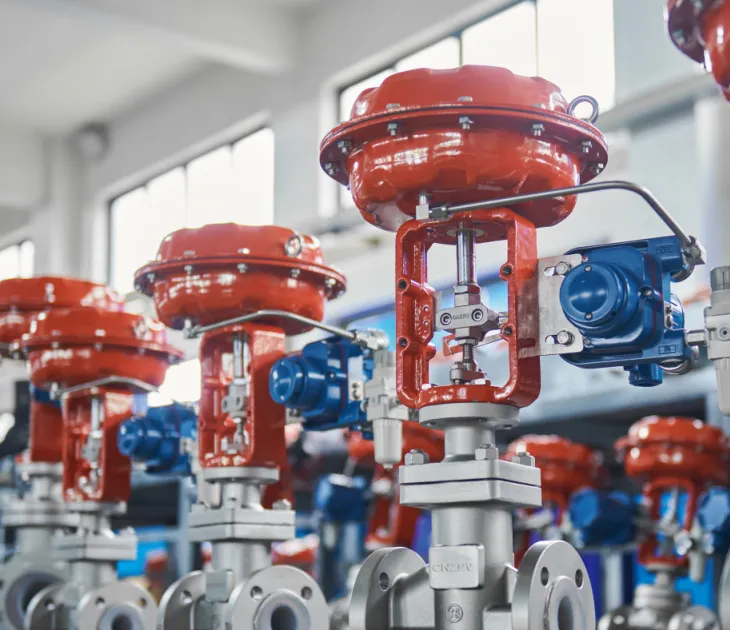
KINKO control valves are engineered for precise regulation of pressure, temperature, flow, and liquid level in demanding process applications. With a wide range of body styles, trim options, and actuation methods, these valves deliver reliable, accurate control across the most critical loops.
Behind Every Solution:


  • ±1% accuracy with positioner integration
  • Equal percentage, linear, and quick-opening characteristics
  • High pressure, high temperature, and corrosive media handling
  • Functional safety for critical applications
KINKO Control Valves
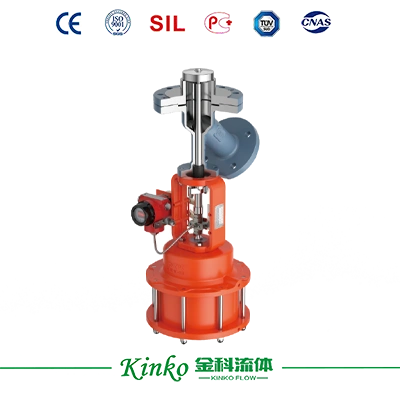
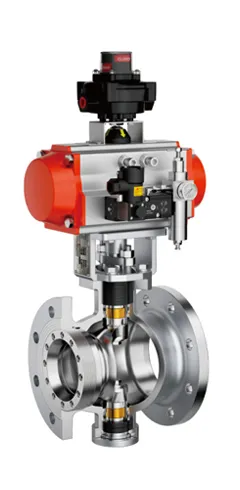
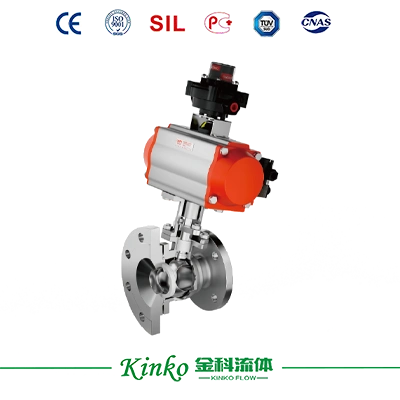
Pneumatic Inclined Stem Discharge Ball Valve
Model
ZPRX740F
Nominal Diameter
DN15~DN350
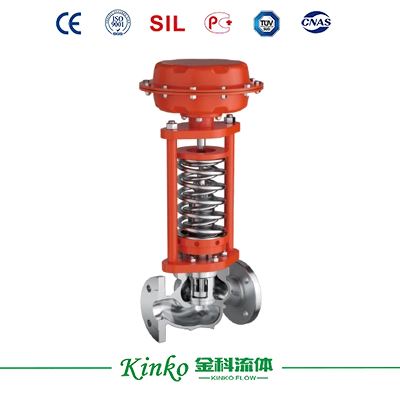
Linear Motion Spherical-Housing Shut-Off Globe Control Valve
Model
ZPL270F
Nominal Diameter
DN15~DN350
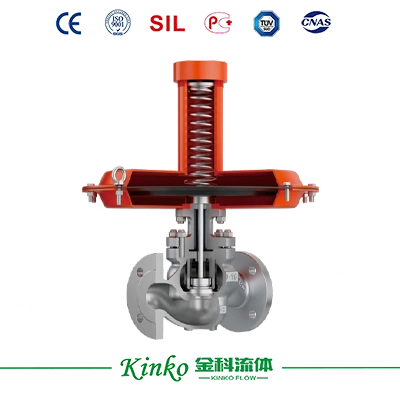
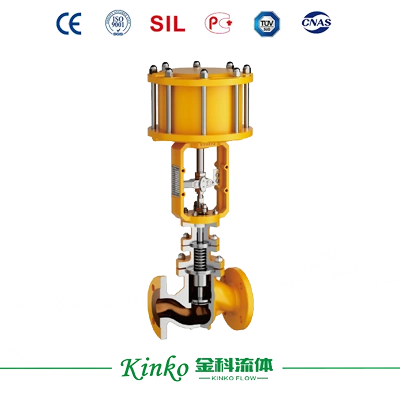
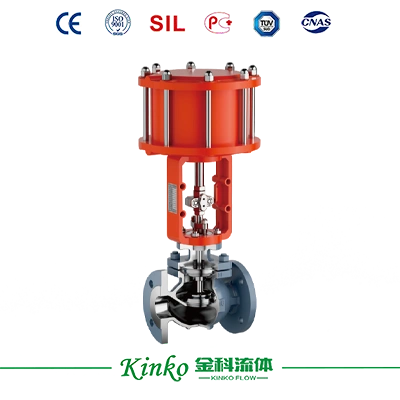
Pneumatic Rising-stem Discharge Control Valve
Model
ZPL180Y
Nominal Diameter
DN15~DN350
Self-Operated Pressure Regulator
Model
ZPL610F (ZZYP)
Nominal Diameter
DN20~DN300
Self-Operated Micro-Pressure Regulator
Model
ZPL620F (ZZVP)
Nominal Diameter
DN20~DN100
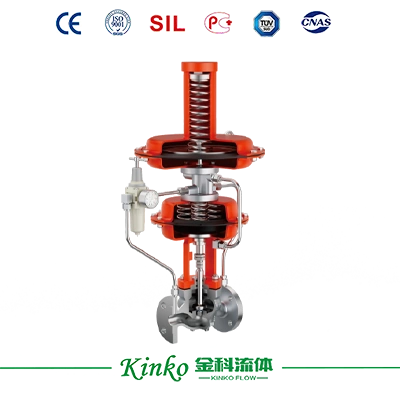
Pilot-controlled Self-acting Pressure Regulator
Model
ZPL630F (ZZYVP)
Nominal Diameter
DN20~DN100
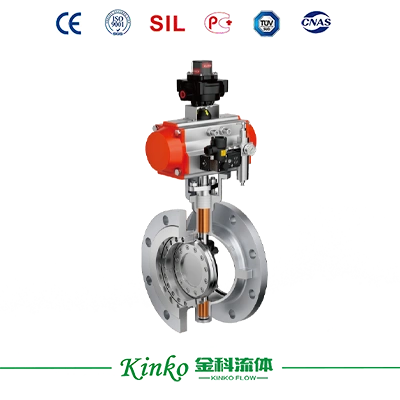
Eccentric Metal-Seated Butterfly Valve
Model
ZPR820
Nominal Diameter
DN50~DN1200
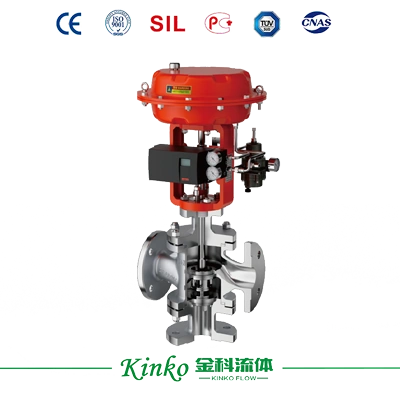
Pneumatic 3-Way Converging / Diverting Control Valve
Model
ZPL310Y/ZPL320Y
Nominal Diameter
DN25~DN200
Pneumatic Chlorine-service Control / Visolationvalve
Model
ZPL280W/ZPL290W
Nominal Diameter
DN15~DN350
Design Principles

Why are KINKO Control Valves so durable?

  • Pneumatic actuators operate independently of the working medium via piston rod connection
  • Self-adjusting packing ensures long-term, leak-free dynamic sealing
  • Bi-directional flow capability; for liquids, flow should close against the seat to prevent water hammer
Consult an Expert Online Arrow icon
Control Valves design principles illustration

The Core Advantages of KINKO Control Valves

Engineered for precise regulation of pressure and flow rates.
±1% regulation accuracy
Precise control with positioner integration.
±1% regulation accuracy
Multiple flow characteristics
Equal percentage, linear, quick-opening available.
Multiple flow characteristics
SIL3 functional safety
Certified for critical safety loops.
SIL3 functional safety
Wide material selection
WCB, CF8, CF8M, 316L, Hastelloy, PTFE-lined.
Wide material selection
Cage-guided or top-guided
Stable operation with low maintenance.
Cage-guided or top-guided
Integrated accessories
Positioner, limit switch, solenoid valve, filter regulator.
Integrated accessories
Customized valve solution background

Do you need a customized angle seat valve for your specific operating conditions?

Get a Customized Solution Arrow icon

Applicable Industries and Customization Capabilities

upload/1c/202608/Control-Valves-app.webp
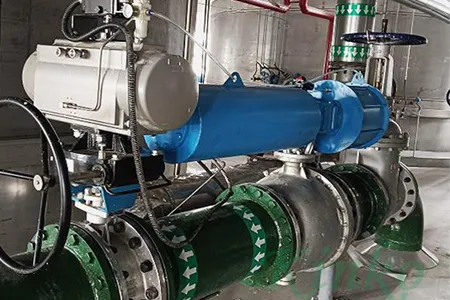
Pneumatic Control Valves in Chemical Reactor Temperature Control
upload/1c/202608/Control-Valves-app1.png
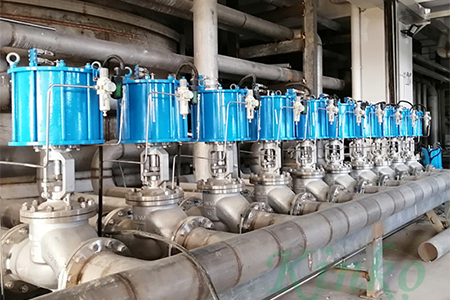
Electric Control Valves in Power Plant Steam Regulation
upload/1c/202608/Control-Valves-app3.webp
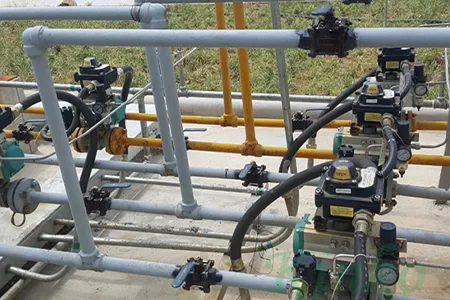
Control Valves in Pharmaceutical Sterile Processing
Industrial Internet of Things cloud platform

Industrial Internet of Things, cloud control, big data analysis, pre diagnostic platform


Users can easily form an industrial Internet of Things through Bluetooth, WiFi, LORA, NB-IoT, Zigbee, GPRS, 4G, 5G and other methods, directly realizing remote wired and wireless control and communication. They can also access cloud data to achieve multi-screen control via industrial computers, mobile phones, tablets, etc., monitoring the operation status and data recording of valves, real-time monitoring and control of pipeline fluid flow, temperature, pressure, etc. At the same time, based on cloud data analysis, they can provide customers with pre-diagnostic reports on the status of actuators, valves and other equipment to help users maintain equipment more scientifically.
  • Flexible connectivity – Supports Bluetooth, WiFi, 4G/5G, LORA, NB-IoT, and more for remote wired or wireless control.
  • Real-time monitoring – Enables multi-screen access to valve status, flow, temperature, and pressure data anytime, anywhere.
  • Predictive maintenance – Cloud-based data analysis generates pre-diagnostic reports, helping users identify issues before they fail.

FAQ

How do I choose between equal percentage and linear flow characteristics?
Equal percentage characteristic is preferred when system pressure drop varies significantly (typical in most process control), providing consistent control throughout the stroke. Linear characteristic is suitable when pressure drop is relatively constant. Our engineers can assist with selection based on your specific loop conditions.
What is the typical control accuracy of KINKO control valves?
Standard accuracy is ±1% FS with positioner integration. High-precision options achieve ±0.5% FS. Accuracy depends on valve size, actuator type, positioner quality, and process conditions.
What does SIL3 certification mean for control valve applications?
SIL3 (Safety Integrity Level 3) certification indicates the valve meets the highest reliability standards for critical safety loops such as Emergency Shutdown (ESD) and High-Integrity Pressure Protection Systems (HIPPS), with a very high probability of performing its safety function when required.
What materials are available for corrosive media handling?
Valve bodies can be supplied in WCB, CF8, CF8M, 316L, Hastelloy C276, and PTFE-lined options. Trim materials include 316L, Hastelloy, Stellite hardfacing, and ceramic for abrasive service. Material selection depends on media type, temperature, and pressure.
What is the recommended operating range for control valve opening?
For optimal control, the valve should operate between 20% and 80% open at normal flow conditions. Avoid operating below 20% open (risk of poor control and cavitation) or above 85% open (loss of control authority). Valve sizing should be verified by Cv calculation.
Get a Quote or Technical Support
News & Blog
The Working Principle of The Regulating Valve
The regulating valve is a key piece of equipment used to accurately control the flow of fluids (gas, liquids, or steam) ...
2026.09.03
Learn more
How to install a straight stroke pneumatic actuator?
The installation of straight-stroke pneumatic actuators should follow strict steps and precautions to ensure their effic...
2026.08.12
Learn more
Introduction To The Stroke and Control Mode of Electric Actuators
According to the movement form, the electric actuator can be divided into straight stroke, angular stroke and multi-turn...
2026.08.05
Learn more
onlineCONTACT
We value your privacy
We use cookies to provide you with a better online experience, analyse and measure website usage, and assist in our marketing efforts.
Accept All
Don't Accept