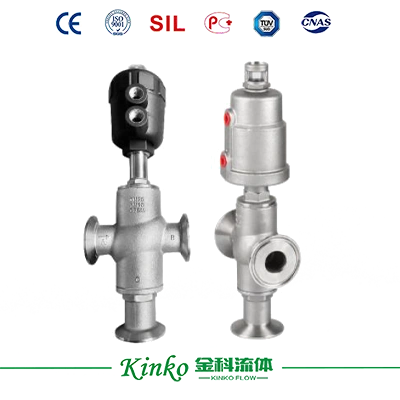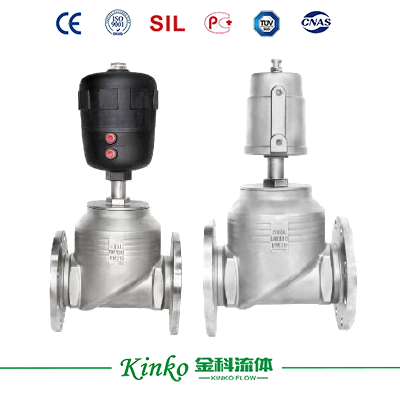
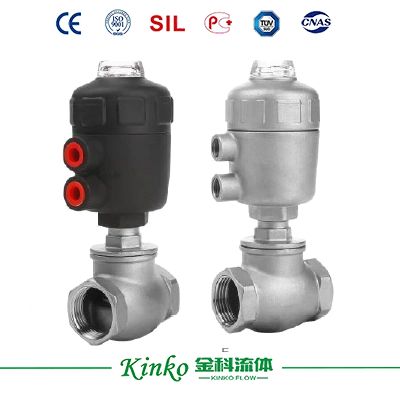
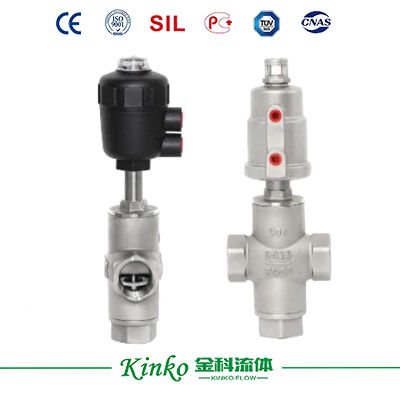
KINKO Pneumatic Angle Seat Valve

The valve body is constructed from CF8/CF8M stainless steel and offers a variety of end connection options (welded, threaded, clamped, or flanged). It is suitable for a wide temperature range of -20°C to +180°C. When installed in a flow-closing configuration, it generates no water hammer effect.
Behind Every Solution:


  • Service life exceeding 1 million cycles
  • Class VI Zero Leakage
  • Temperature resistance: 180°C
  • IP68 Protection
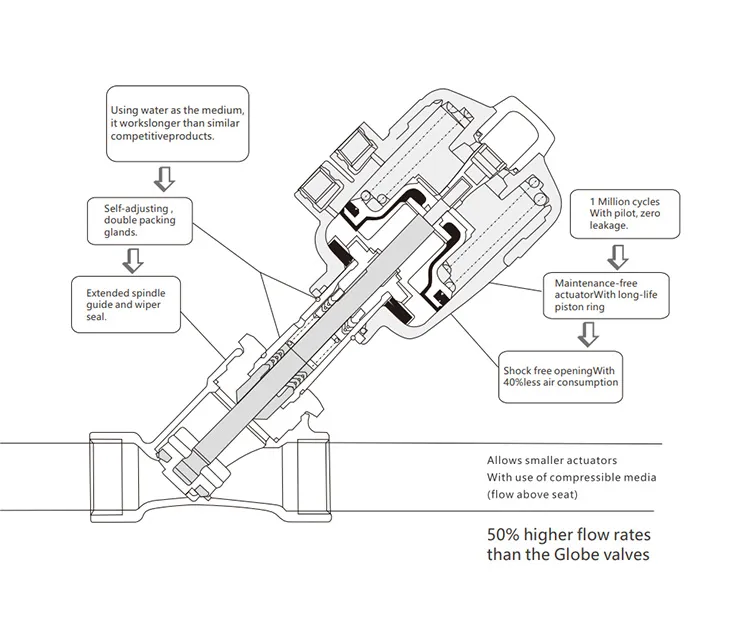
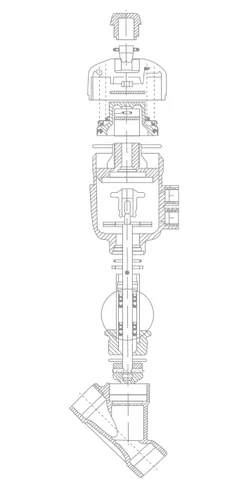
KINKO Pneumatic Angle Seat Valve Drawings
Design Principles

Why are KINKO angle seat valves so durable?

  • The closing mechanism of the Jinke angle seat valve consists of a valve plug fitted with a seal, which seats tightly against the valve seat. By controlling the position of the valve plug, the flow rate can be regulated according to the valve's opening degree.
  • The pneumatic actuator connects to the valve plug via a piston rod and operates independently of the working medium. Dynamic sealing of the piston rod is achieved through self-adjusting packing, ensuring long-term, leak-free operation.
  • The angle seat valve permits flow in both directions. For liquid applications, it is strongly recommended that the flow direction be configured to close against the seat (flow entering from beneath the seat) to prevent water hammer effects and pressure spikes.
Consult an Expert Online Arrow icon
Angle Seat Valves design principles illustration

The Core Advantages of KINKO Angle Seat Valves

Constructed from CF8/CF8M stainless steel for durable, versatile performance.
50% more economical than ball valves.
0.01 L/min-level precision—specifically designed for laboratory and fine chemical applications.
50% more economical than ball valves.
40% Lower Air Consumption
Optimized airflow design ensures shock-free opening—energy-efficient and eco-friendly.
40% Lower Air Consumption
Flow rate is 50% higher than that of a globe valve
Y-shaped flow channel design, featuring low flow resistance and high flow capacity.
Flow rate is 50% higher than that of a globe valve
No Water Hammer Effect
Optimized Flow Design: Prevents Pressure Surges
No Water Hammer Effect
Flexible and Convenient Installation
Compact Design: Mountable in Any Position with 360° Actuator Orientation
Flexible and Convenient Installation
Durable and Reliable Sealing
Self-Adjusting Dual Packing, Extended Stem Guiding, Maintenance-Free Actuator
Durable and Reliable Sealing
Customized valve solution background

Do you need a customized angle seat valve for your specific operating conditions?

Get a Customized Solution Arrow icon

Applicable Industries and Customization Capabilities

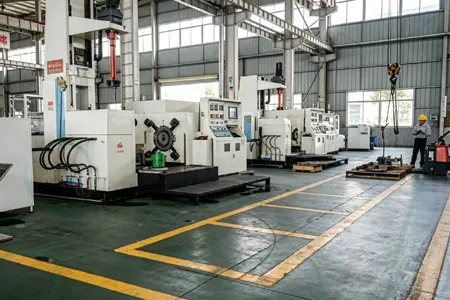
upload/1c/202608/CNC-pressure-testing-machine.webp
CNC Pressure Testing Machine
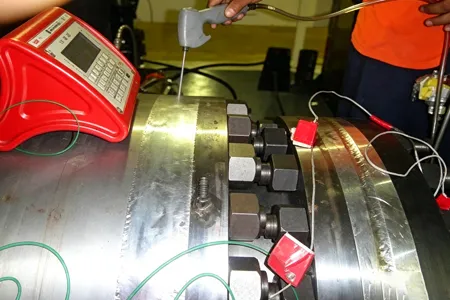
upload/1c/202608/Gas-Emission-Detection.webp
Gas Emission Detection
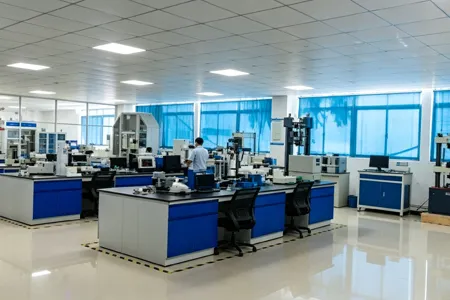
upload/1c/202608/Physical-And-Chemical-Laboratory.webp
Physical And Chemical Laboratory
Industrial Internet of Things cloud platform

Industrial Internet of Things, cloud control, big data analysis, pre diagnostic platform


Users can easily form an industrial Internet of Things through Bluetooth, WiFi, LORA, NB-IoT, Zigbee, GPRS, 4G, 5G and other methods, directly realizing remote wired and wireless control and communication. They can also access cloud data to achieve multi-screen control via industrial computers, mobile phones, tablets, etc., monitoring the operation status and data recording of valves, real-time monitoring and control of pipeline fluid flow, temperature, pressure, etc. At the same time, based on cloud data analysis, they can provide customers with pre-diagnostic reports on the status of actuators, valves and other equipment to help users maintain equipment more scientifically.
  • Flexible connectivity – Supports Bluetooth, WiFi, 4G/5G, LORA, NB-IoT, and more for remote wired or wireless control.
  • Real-time monitoring – Enables multi-screen access to valve status, flow, temperature, and pressure data anytime, anywhere.
  • Predictive maintenance – Cloud-based data analysis generates pre-diagnostic reports, helping users identify issues before they fail.

FAQ

What is the maximum temperature rating for KINKO angle seat valves?
Standard models handle media temperatures from -20°C to +180°C with PTFE seals. High-temperature versions with special seals are available up to 300°C. For steam above 150°C, remote mounting of solenoid pilot valve is recommended to protect the solenoid from heat.
How does the angle seat valve prevent water hammer?
When installed with flow entering from below the seat (closing against the plug), the valve closes smoothly without creating pressure spikes. This flow direction allows the plug to close with the flow, eliminating the water hammer effect common in other valve types.
What is the leakage class of KINKO angle seat valves?
KINKO angle seat valves achieve Class VI zero leakage, the highest leakage class per IEC 60534-4 standards. This ensures bubble-tight shut-off for critical applications such as sterile processing, steam systems, and corrosive media handling.
Can angle seat valves be used in both directions?
Yes, angle seat valves support bi-directional flow. However, for liquid media, the recommended installation is flow entering from below the seat (closing against the plug) to prevent water hammer. For gas and steam, flow direction is less critical.
What is the expected cycle life of KINKO angle seat valves?
KINKO angle seat valves deliver over 1 million cycles in continuous operation. With self-adjusting PTFE seals and maintenance-free actuators, they are engineered for 24/7 industrial operations where frequent cycling is required.
Get a Quote or Technical Support
News & Blog
The Working Principle of The Regulating Valve
The regulating valve is a key piece of equipment used to accurately control the flow of fluids (gas, liquids, or steam) ...
2026.09.03
Learn more
How to install a straight stroke pneumatic actuator?
The installation of straight-stroke pneumatic actuators should follow strict steps and precautions to ensure their effic...
2026.08.12
Learn more
Introduction To The Stroke and Control Mode of Electric Actuators
According to the movement form, the electric actuator can be divided into straight stroke, angular stroke and multi-turn...
2026.08.05
Learn more
onlineCONTACT
We value your privacy
We use cookies to provide you with a better online experience, analyse and measure website usage, and assist in our marketing efforts.
Accept All
Don't Accept