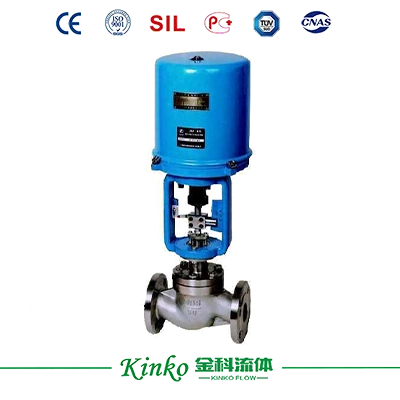
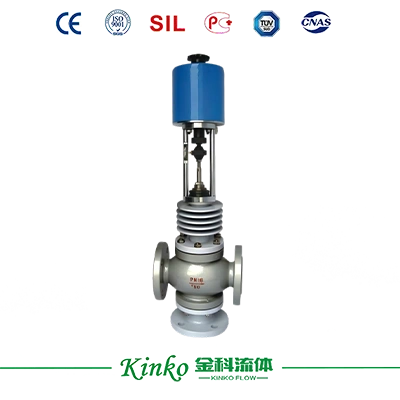
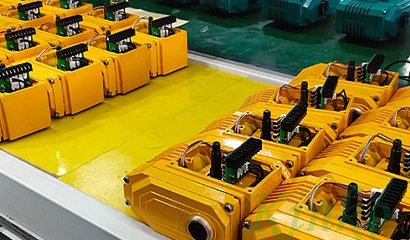
The ZAZP electric single-seat control valve and ZAZM sleeve-type control valve receive direct current (DC) signals from control instruments to adjust the flow rate of the process medium, thereby maintaining controlled process parameters at their specified setpoints. These valves are widely used for automated process control in industrial sectors such as power generation, metallurgy, chemicals, petroleum, textiles, pharmaceuticals, and papermaking.
Product Overview
This series of products features nominal diameters ranging from 20 to 200 mm, nominal pressure ratings of 1.0, 1.6, 4.0, and 6.4 MPa, and an operating temperature range of -40°C to 450°C. They accept control signals of 0–10 mA DC or 4–20 mA DC. Electric single-seat control valves are suitable for applications with low pressure differentials, high-viscosity media, or media containing minor particulate impurities, while electric sleeve-type control valves are designed for applications with higher pressure differentials. Depending on the material used for the valve trim sealing components—metal or non-metal—the latter can achieve Class VI (zero-leakage) shut-off standards. Based on the type of packing, the valves are categorized into those with standard packing seals (for general use) and those with bellows seals (for critical applications where external leakage is strictly prohibited). Flow characteristics include linear or equal-percentage options. Depending on the actuator type, they are classified as either standard or electronic versions. A wide variety of models and specifications are available to choose from.
The valve body features a constant-cross-section, low-resistance flow passage designed according to fluid dynamics principles, resulting in a 30% increase in the rated flow coefficient.
It offers a wide adjustment range, with an inherent rangeability of 50 and flow characteristics available in both linear and equal-percentage types.
The plug of the electric sleeve control valve is equipped with pressure-equalizing holes at the top and bottom, which minimize unbalanced forces, enhance valve stability, ensure high interchangeability of the sleeve, and allow for operation under high pressure differentials.
For shut-off applications, the valve plug utilizes a soft-sealing design, meeting the Class VI leakage standard (zero leakage).
The servo amplifier employs deep dynamic negative feedback to improve the precision of automatic control.
Various types of electric actuators are available, compatible with 4–20 mA DC or 0–10 mA DC control signals.
Electronic-type electric control valves can be controlled directly via current signals to adjust the valve opening, eliminating the need for a separate servo amplifier.
Bellows-sealed control valves provide a complete seal around the moving valve stem, effectively preventing any external fluid leakage.


Specifications
| Model | ZAZP-16CK |
| Valve body, bonnet | HT200, ZG230-450, ZG1Cr18Ni9Ti |
| Valve plug (core) | ZG1Cr18Ni9Ti, PTFE reinforced with Stellite alloy overlay |
| Packing | PTFE, flexible graphite |
| Push rod, bushing | 2Cr13 |
| Gasket | Rubber-asbestos sheet, or asbestos-wound gasket (made of 10 steel or 1Cr18Ni9Ti) |
| Bellows | 1Cr18Ni9Ti |
Technical Specifications
|
DN (mm) (Valve seat diameter dn) |
20 |
25 |
32 |
40 |
50 |
65 |
80 |
100 |
125 |
150 |
200 |
||||
|
(10) |
(12) |
(15) |
(20) |
||||||||||||
|
Rated flow coefficient |
Direct level |
1.8 |
2.8 |
4.4 |
6.9 |
11 |
17.6 |
27.5 |
44 |
69 |
110 |
176 |
275 |
440 |
690 |
|
Equal percentage |
1.6 |
2.5 |
4 |
6.3 |
10 |
16 |
25 |
40 |
63 |
100 |
160 |
250 |
400 |
630 |
|
|
Rated stroke (mm) |
16 |
25 |
40 |
60 |
|||||||||||
|
Nominal pressure PN (MPa) |
1.0 1.6 4.0 6.4 |
||||||||||||||
|
Inherent flow characteristics |
Straight lines, equal percentages |
||||||||||||||
|
Inherent adjustable ratio |
50 |
||||||||||||||
|
Permissible leakage |
Single Seat |
Hard seal: Class IV; Soft seal: Class VI |
|||||||||||||
|
Sleeve |
Hard seal: Class II; Soft seal: Class VI |
||||||||||||||
|
Operating temperature t (℃) |
-20~200 -40~250 -40~450 -60~450 |
||||||||||||||
|
Signal range (mA. DC) |
0~10 4~20 |
||||||||||||||
|
Mode of action |
Electrically closed type Electrically open type |
||||||||||||||
|
Operating ambient temperature (℃) |
Electric regulating valve: -20~70℃; Servo amplifier: 0~50℃ |
||||||||||||||
|
ambient humidity |
Electric regulating valve: ≤95%; Servo amplifier: ≤85% |
||||||||||||||
|
Power supply voltage |
220V 50Hz 380V 50Hz 24AC/DC |
||||||||||||||
The performance specifications of this product comply with the GB/T 4213-92 standard. Technical parameters for the associated electric actuator are as follows:
|
DN (mm) |
20 |
25 |
32 |
40 |
50 |
65 |
80 |
100 |
125 |
150 |
200 |
|
|
Electric actuator |
Standard |
ZAZ-60 |
ZAZ-60 |
DKZ-410 |
DKZ-410 |
|||||||
|
Electronic |
JHZAZ1 |
JHZAZ1 |
JHZAZ3 |
JHZAZ3 |
||||||||
|
Electric actuator thrust (N) |
Standard |
400 |
400 |
6400 |
6400 |
|||||||
|
Electronic |
2000 |
4000 |
6000 |
8000 |
||||||||
|
Standard |
12.5 |
20 |
32 |
|
||||||||
|
Electronic |
30 |
30 |
48 |
60 |
||||||||
|
Power consumed (N) |
Standard |
28 |
35 |
|||||||||
|
Electronic |
6 |
15 |
25 |
40 |
||||||||
The data in the table represents standard configurations only; specific selections are determined based on key parameters and user requirements.
Connection Standards
| Flange standards | Cast iron flanges in accordance with GB4216-84; flanges in accordance with GB9113-88. |
| Flange sealing surface types | Raised face (RF) for PN10 and PN16; tongue-and-groove (with the valve body featuring the groove) for PN40 and PN64. |
| Face-to-face dimensions | In accordance with GB12221-89. |
| Jacketed (insulation/heating) version | The heat-transfer medium connection port is a butt-weld joint (φ18×4). |
Valve body flanges and face-to-face dimensions can be manufactured according to customer-specified standards, such as ANSI, JIS, or DIN.
Downloads

Application & Case
Lorem ipsum dolor sit amet, consectetur adipiscing elit. Aenean euismod bibendum laoreet. Proin gravida dolor sit amet lacus accumsan et viverra justo commodo. Proin sodales pulvinar sic tempor. Sociis natoque penatibus et magnis dis parturient montes, nascetur ridiculus mus. Nam fermentum, nulla luctus pharetra vulputate, felis tellus mollis orci, sed rhoncus pronin sapien nunc accuan eget.